
Abhishek slaps 10-crore defamation notice on Madan Mitra over 'murderer' jibe
.gif)

Download Mobile App 







The 2025 Nobel Prize in Chemistry has been awarded jointly to Susumu Kitagawa of Kyoto University, Japan, Richard Robson of the University of Melbourne, Australia, and Omar M. Yaghi of the University of California, Berkeley, USA, for their pioneering work in creating metal-organic frameworks (MOFs).. The announcement, made by the Royal Swedish Academy of Sciences on Wednesday, recognizes the trio for "creating new rules" in chemistry by designing molecular architecture that offers unprecedented opportunities for custom-made materials with highly specific functions. This groundbreaking innovation is poised to address some of humanity's most urgent challenges, from climate change mitigation to water purification.
MOFs are complex, porous crystals built by linking metal ions, which act as cornerstones, with long, carbon-based organic molecules. The resulting structure resembles a diamond riddled with countless cavities, capable of capturing and storing specific substances. This rational design capability allows chemists to engineer materials precisely tailored for tasks like gas separation, catalysis, or even electricity conduction.
The pioneering journey began in 1989 with Richard Robson, a professor at the University of Melbourne, who first explored combining positively charged copper ions with a four-armed molecule. Robson's initial work demonstrated the potential of this molecular self-assembly to create a well-ordered, spacious crystal. However, these early constructions were often unstable and prone to collapse upon drying.
Building upon Robson’s foundational idea, Susumu Kitagawa of Kyoto University and Omar M. Yaghi of the University of California, Berkeley, provided the stable architecture necessary for practical application. Between 1992 and 2003, Kitagawa demonstrated that gases could freely flow in and out of the MOF structures, predicting their potential flexibility, while Yaghi succeeded in synthesizing highly stable frameworks. Yaghi’s breakthroughs proved that these porous structures could be rationally modified to acquire specific, desirable properties.
The practical applications stemming from the laureates' discoveries are vast and growing. Chemists worldwide have since created tens of thousands of different MOFs, unlocking new solutions for energy and environmental challenges. These applications include efficiently capturing carbon dioxide from the atmosphere, filtering harmful PFAS chemicals from water supplies, breaking down pharmaceutical pollutants, and even harvesting fresh water directly from desert air.
The trio will share the prestigious prize money of 11 million Swedish kronor (approximately $1 million), an amount set forth in the will of Alfred Nobel. The award ceremony, which marks the anniversary of Nobel's death, is scheduled for December 10, recognizing their contribution to creating porous materials that have fundamentally revolutionized the field of material science and promise significant benefits to humankind.





.webp)

.webp)


 West Bengal
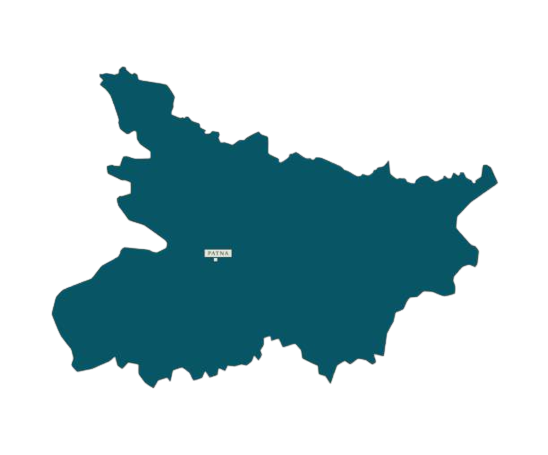 Bihar
Bihar Uttar Pradesh
 Jharkhand